
Websites for Retail and Local Shops
Instagram rents you an audience. A website is the one piece of your brand you actually own. I build sites for local shops that turn followers and searches into people walking through the door.
Your shop already has a brand. The internet should agree.
Walk into a good local shop and you feel it immediately: the curation, the lighting, the personality that no mall chain can fake. Then you look the same shop up online and too often find a dead Facebook page, an Instagram grid, and no website at all.
That gap costs real customers. People check a shop online before making a trip, sometimes standing a block away. When nothing solid comes up, doubt does the deciding. A website closes that gap: it is the one place online where your brand looks exactly the way you built it to look.
Social media is the megaphone. The site is the address.
Instagram and Facebook are where a shop gets discovered, and nothing on a website replaces that. But a follower is not yours. Reach rises and falls with an algorithm, accounts get locked, platforms fade, and the audience you spent five years building can go quiet in a month.
The website is the asset you own. It carries your story, your location and hours, your catalog, and your contact, and it never changes its rules on you. The healthy setup is a loop: social posts pull people in, the bio link lands them on your site, and the site either sells them or sends them to the store. I build shop sites to close that loop, with your feeds woven in so the site and the socials feel like one brand.
From search result to front door
For a physical shop, the website's most important conversion is not a checkout. It is a person deciding the trip is worth it. That decision hinges on small, unglamorous things done well:
- Hours that are current, including holidays
- The neighborhood and parking situation explained like a local would
- Photos of the actual shop, so first-timers know what they are walking into
- Enough of the catalog to promise the visit will be worth it
I treat these as the core content of a retail site, not fine print. A customer who can picture the visit takes the visit.
Florida shops sell to visitors, not just neighbors
Tourism in this state does not really have an off season, which means a share of your foot traffic is people who have no idea what is on your street. They are deciding from a hotel room, a rental, or a parked car, and they are deciding from search results and photos.
A site built for that reader wins trips a locals-only site never gets: clear directions, a sense of the neighborhood, hours a visitor can trust, and enough of the catalog to make the detour feel worthwhile. It works the same for a shop in a beach town, a downtown district, or a suburban plaza.
Show the goods without running a warehouse
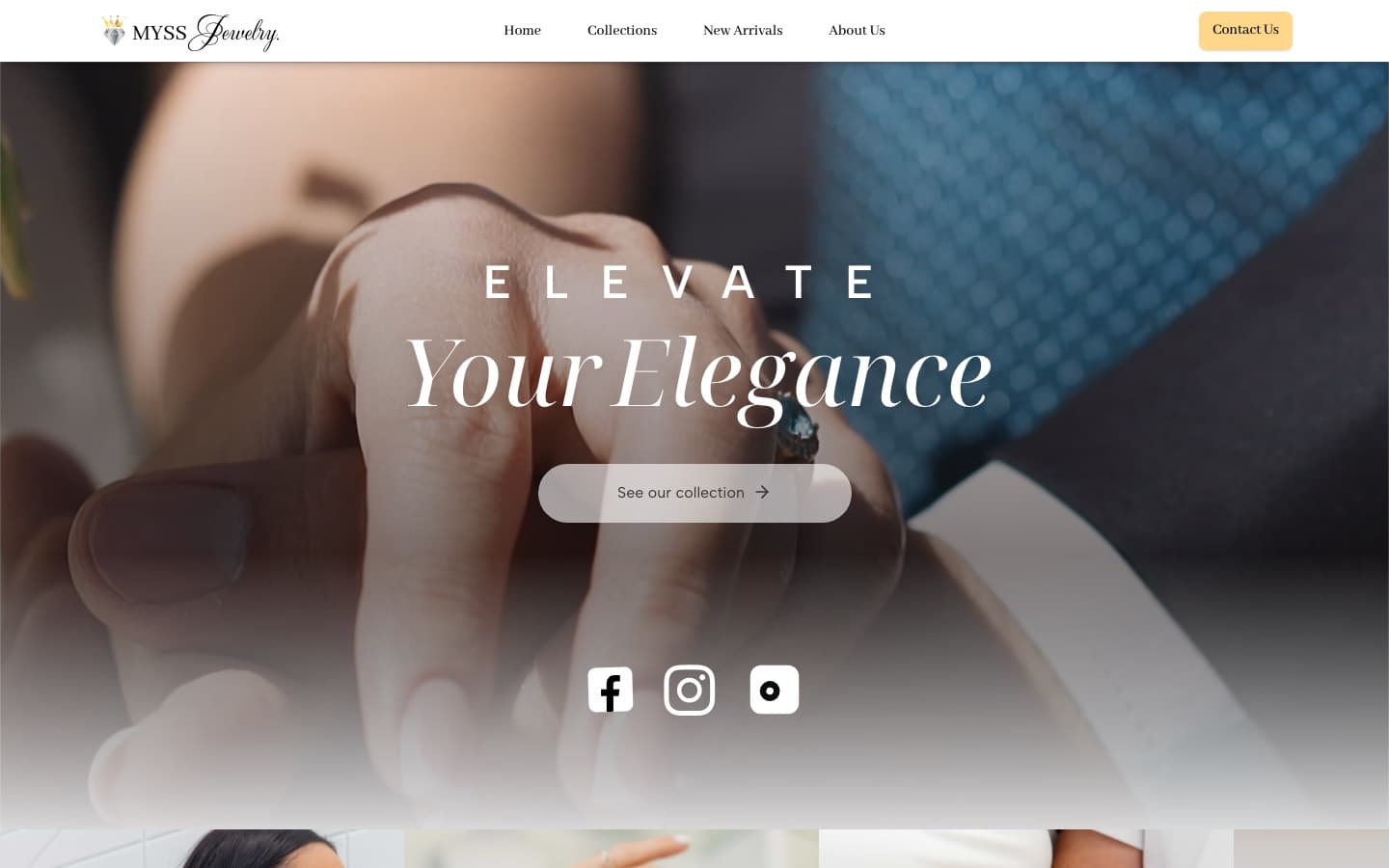
Full e-commerce is a commitment: inventory sync, shipping, returns, payment handling. Some shops need it. Many do not, and for them a curated catalog works better, beautiful photos, prices, and a clear invitation to visit, message, or call to purchase. This is how a jewelry shop in my portfolio presents its pieces.
I will give you a straight recommendation either way. Selling you an online store you will not maintain helps neither of us.
Local search does the quiet work
Foot traffic increasingly starts as a search: boutique near me, jewelry store plus a city name, gift shop open now. Shops with a well-structured site show up in those moments; shops without one are invisible to them. Every retail site I build has its location, offerings, and hours written into pages search engines can actually read, plus the technical basics done right. It is unglamorous work that keeps paying for years.
Small shop, serious presentation
Shoppers judge a business by its website the way they judge it by its storefront. The good news: a small shop site done well looks every bit as credible as a chain's, at a fraction of the scale. Clean design, honest photography, and fast pages signal care, and care is the whole promise of shopping local.
Working together
I have built websites since 2021 and currently maintain fourteen client sites plus two of my own across eight industries, including retail. I am based in Tampa, work with shops across Florida, take remote clients throughout the United States, and build in English and Spanish, useful when your customers live in both languages.
Projects start at $1,497, one time, and when your collection changes, your site changes with it, because I maintain what I build. That is a floor rather than a set price, so the number moves with how many pages you need, who writes the content, whether the site is in one language or in English and Spanish, and what it has to do besides inform. You get the full price in writing before anything begins, and the monthly plan that keeps the site working starts at $99 a month, quoted against what your site actually needs.
Real work from this industry
Common questions
We sell mostly in person and on Instagram. Why do we need a website?
Because everything you do not own can change overnight. An algorithm shift, a locked account, or a platform decline can mute years of work. The site is the home base you control: it holds your story, your hours, your location, and your catalog, and every social profile points back to it.
Can the site connect to our Instagram and Facebook?
Yes. Your social profiles link prominently from the site, and the site becomes the link your bio points to. I can also feature your latest pieces or posts on the site so the two feel like one brand instead of two disconnected accounts.
Do we need a full online store?
Not necessarily, and I will tell you honestly if you do not. Many shops do better with a browsable catalog that drives visits and DMs than with the overhead of full e-commerce. If online checkout genuinely fits how you sell, we build it. If not, we skip the complexity.
Will people find us when they search for shops nearby?
That is a core goal of the build. The site is structured for local search, with your location, hours, products, and neighborhood written into real pages that Google can read, so searches like jewelry store near me have something solid to find.
Ready when you are
Tell me about your business in four short steps. I reply within one business day.